Launch offer — valid today only

The Easiest Way to Prep for the Rigger Level I and Signalperson Exams With Every Rule Drawn Step by Step!

You already do the work. The handbook gives you the rules as a wall of text. Here every topic fits on one page: the drawing, the number and the rule, checked against OSHA 1926 Subpart CC and ASME B30.9. 75 illustrated pages.

I WANT TO STUDY IT WITH DRAWINGS

🔒 Secure checkout · PDF by email · 30-day guarantee

One topic per pagethe drawing shows you the rule and the text backs it up
75 illustrated pages9 parts, from the cards and the rules to test day
Up-to-date sourcesOSHA 1926 Subpart CC, OSHA 1910.184 and ASME B30.9

This Is What the Pages You Will Study Look Like

One topic per page, the drawing that shows you how it's done and the boxes with what you need to know:

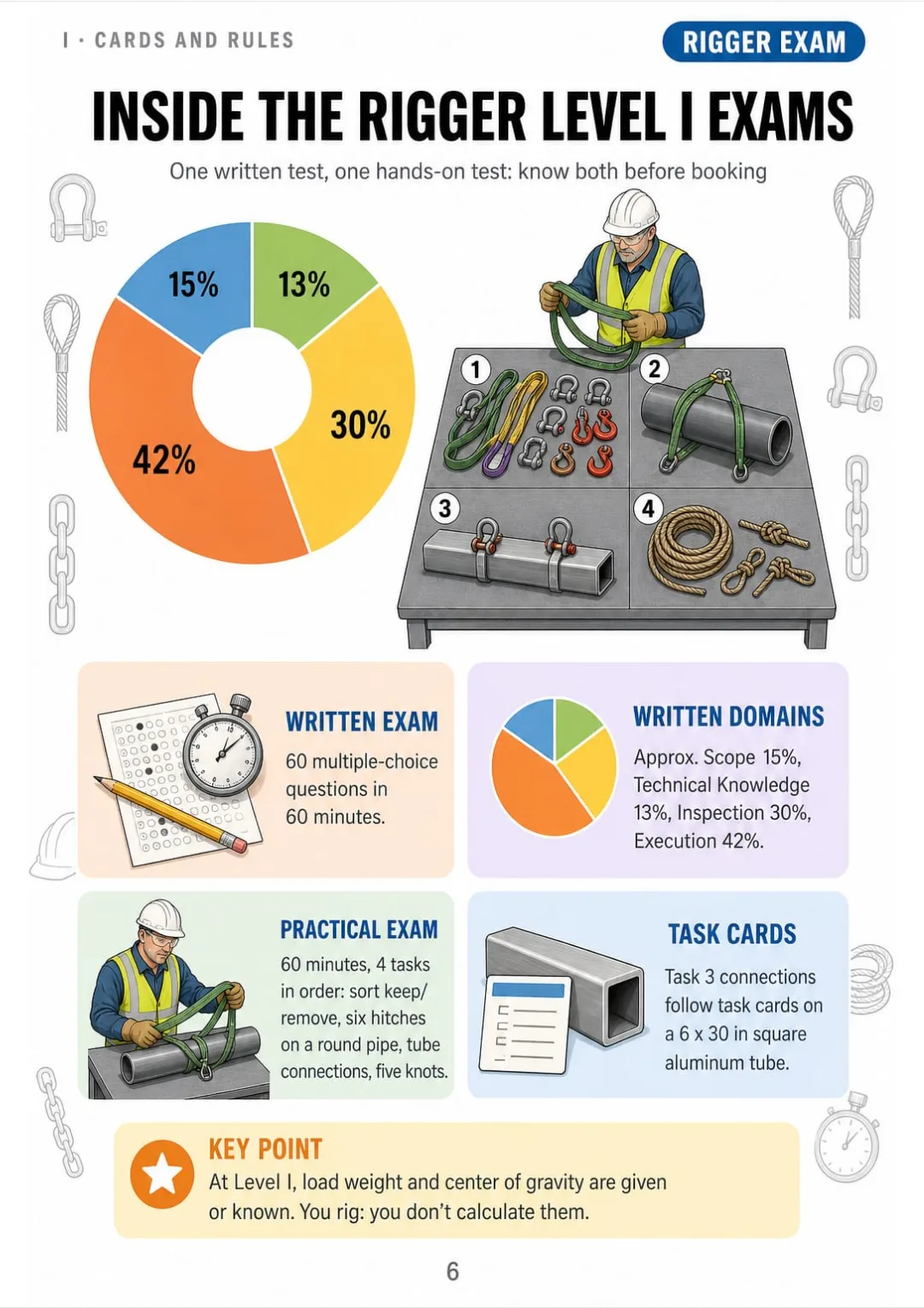
Rigger Level I: 60 questions in 60 min · Execution 42%, Inspection 30% · 4 practical tasks
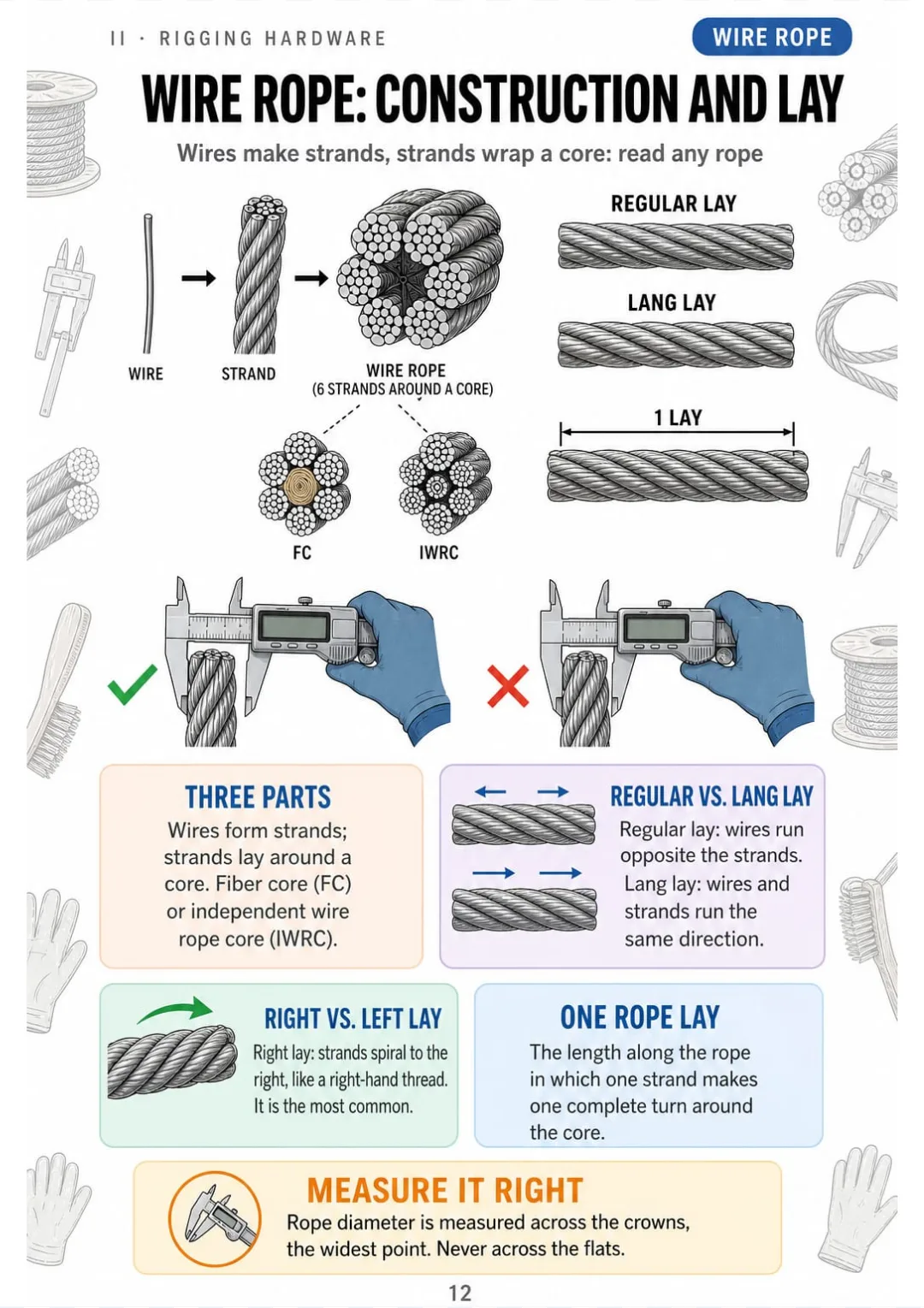
Wire rope anatomy: FC vs. IWRC, regular vs. Lang lay, diameter across the crowns
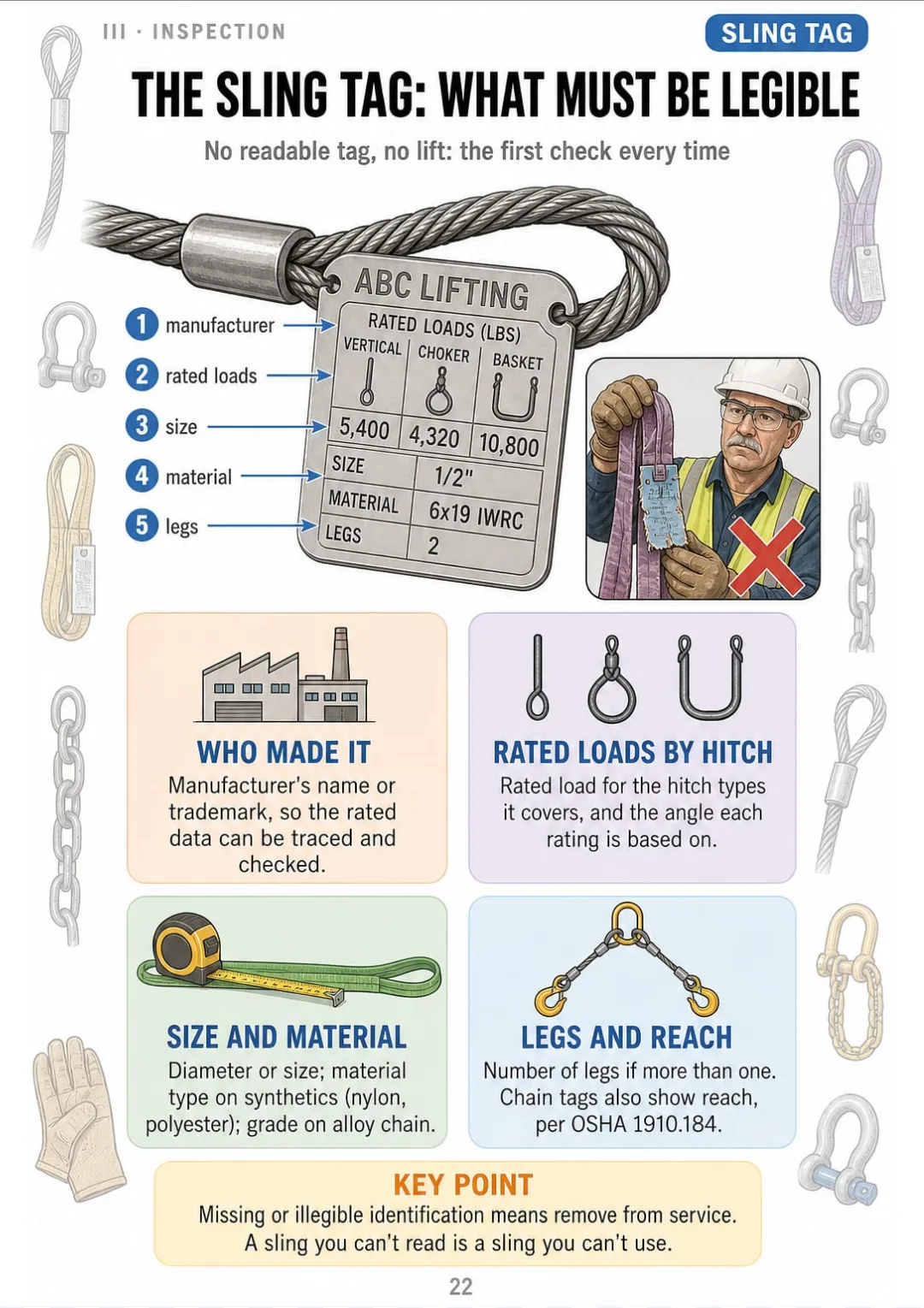
Manufacturer, rated loads per hitch, size, material, legs: the tag fields per ASME B30.9.
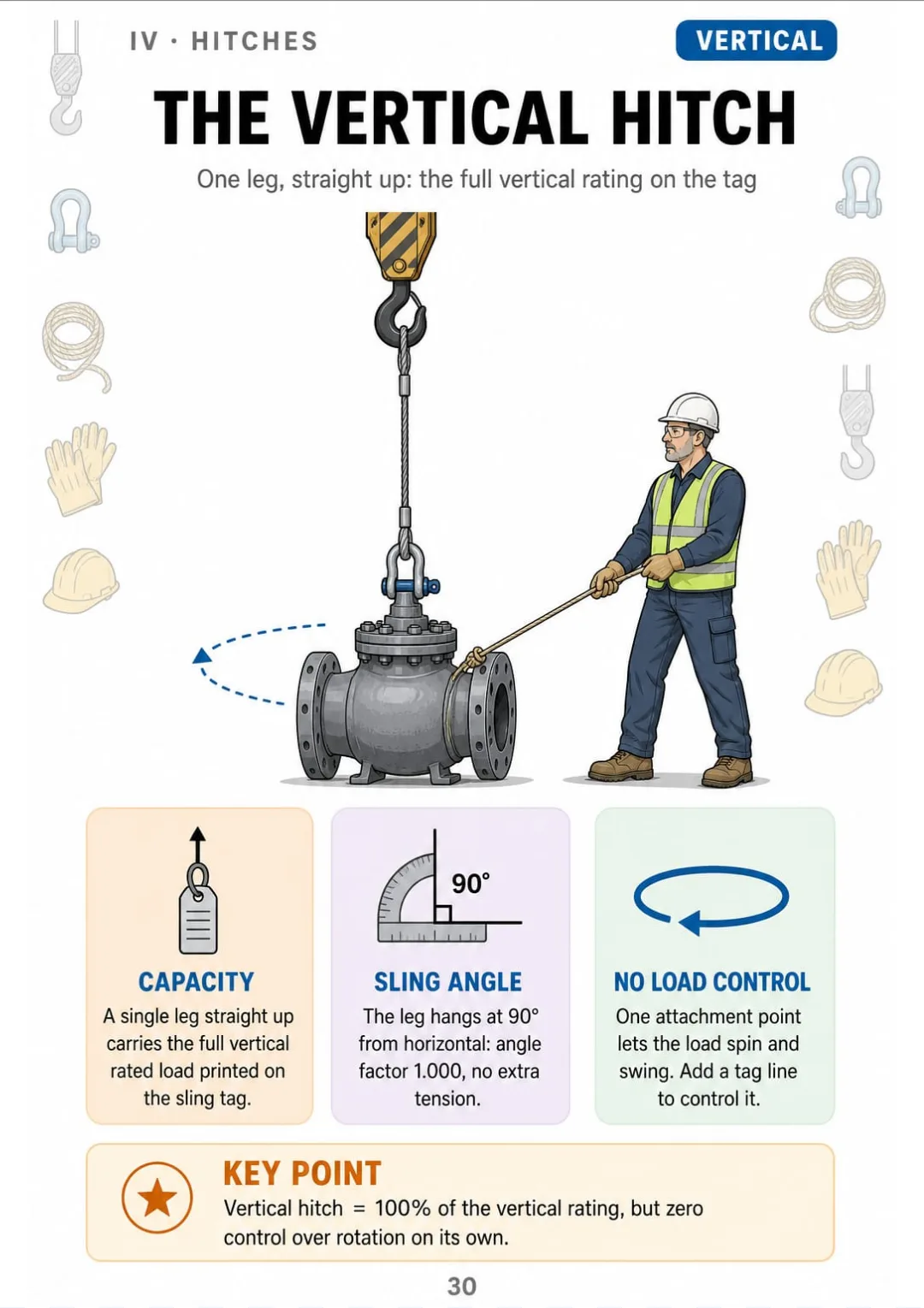
Vertical hitch: full vertical rated load on the tag, angle factor 1.000, tag line for control.
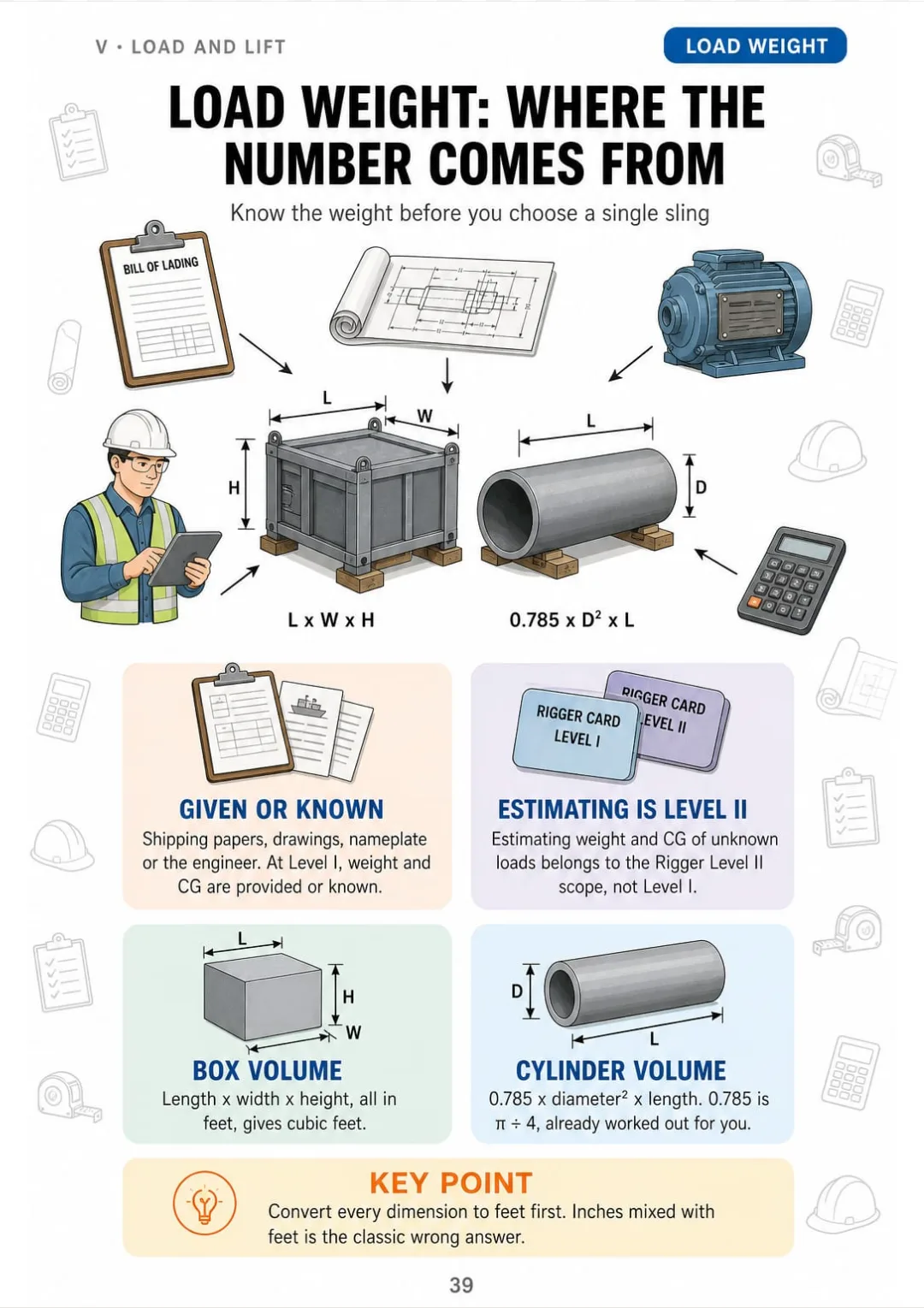
Five sources for the weight, plus box L x W x H and cylinder 0.785 x D² x L
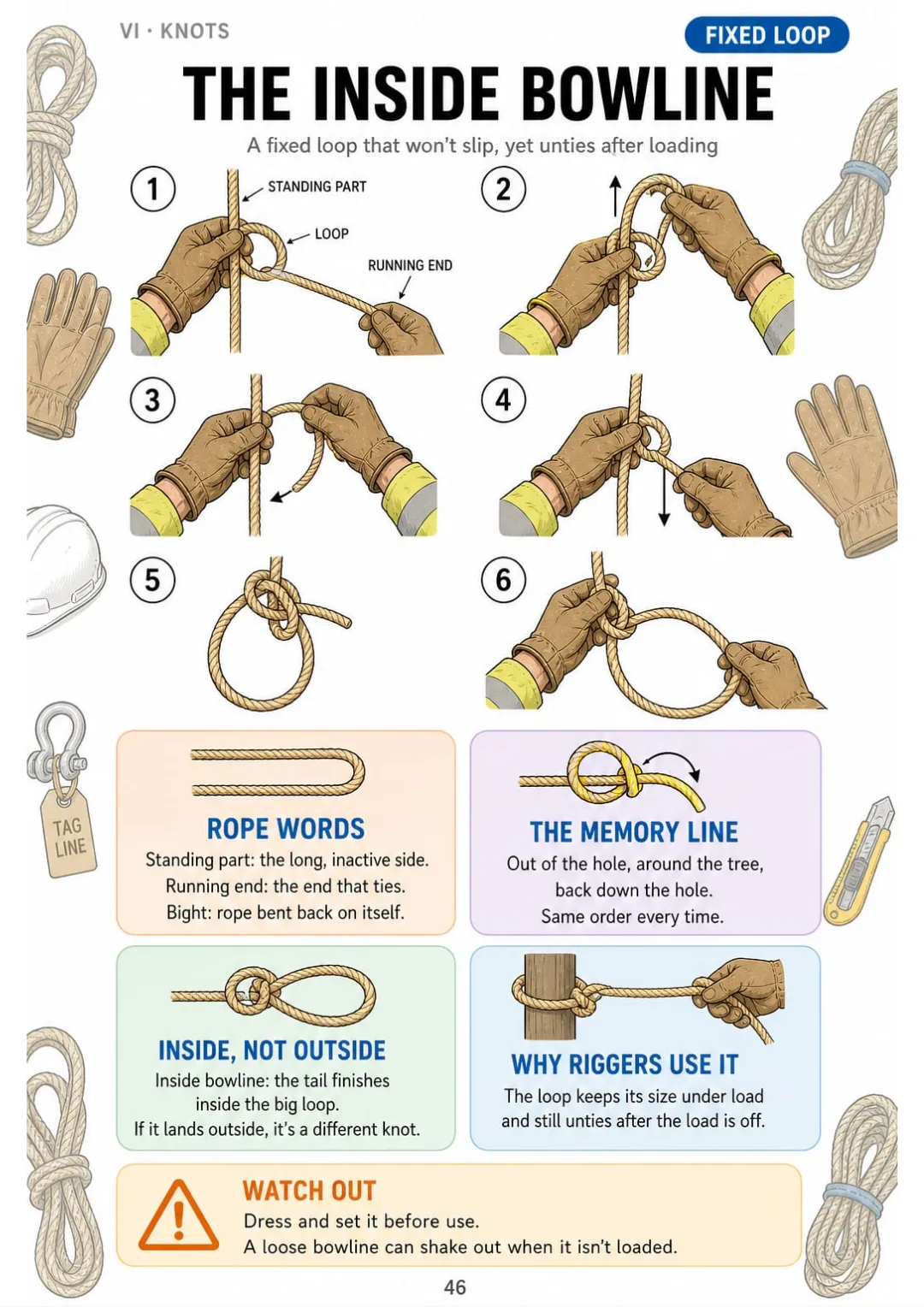
Inside bowline: 6 drawn steps, tail finished inside the loop
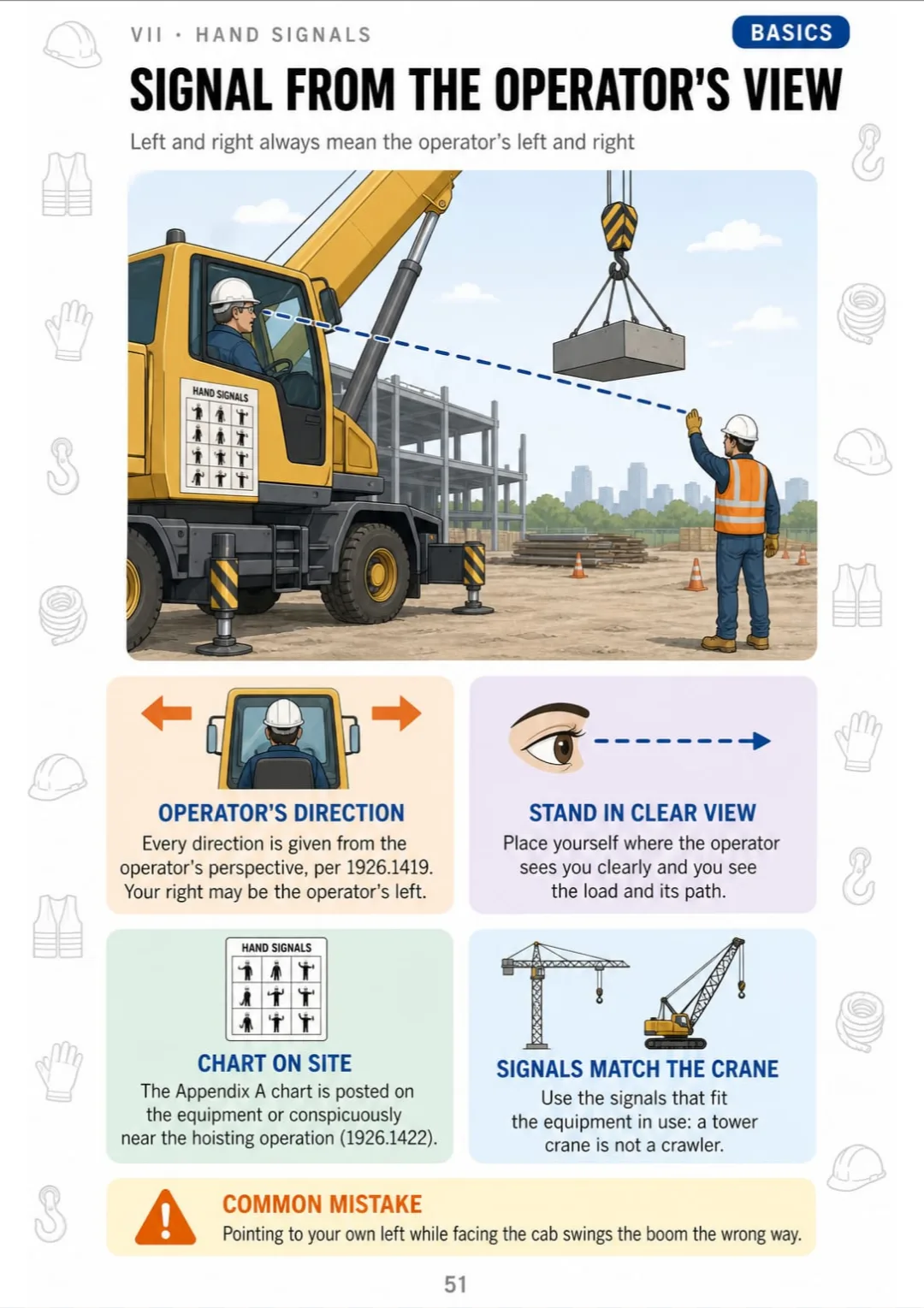
Directions from the operator's perspective, in clear view, chart posted (1926.1419, 1926.1422)
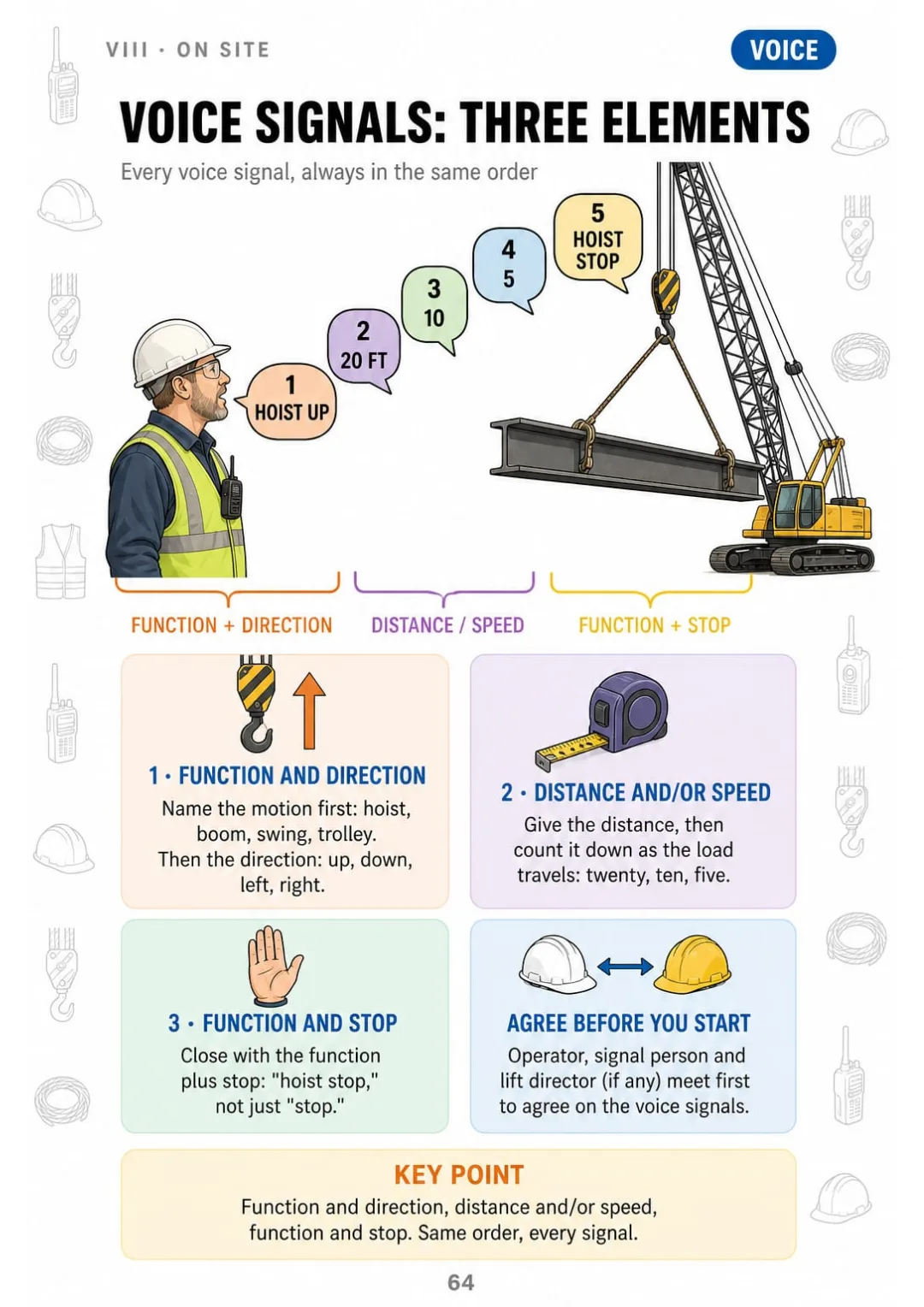
1926.1421: function and direction, distance and/or speed, function and stop.

Swipe to see more →

These are real pages from the book. The table of contents is the full one: 9 parts and 70 topics.

It's Not Your Memory. Nobody Ever Showed You the Rules in Order.

You've read the section on sling tags three times. You close the handbook...

...and you can't remember which fields have to be on the tag. It was just lines of text, one after another.

Manufacturer, rated loads per hitch, size, material, legs: the tag fields per ASME B30.9.

Here the sling tag is one page, drawn the way you'll see it on the sling: manufacturer, size, material, number of legs and the rated load for each hitch.

And on the pages next to it, every topic gets its own: the wire rope removal criteria, the hook, the choker hitch, the sling angle and the stop signal.

First you understand why it's done that way. Then the order stays with you on its own.

SEE THE DIFFERENCE

Stop Memorizing Rules You Can't Picture:

THIS
  • Pages and pages of crammed text
  • Rules without a single drawing
  • On the exam, you don't know where to start
Wire rope consists of individual wires laid helically into strands, which are in turn laid around a core. The core may be fiber (FC) or an independent wire rope core (IWRC), the latter offering greater resistance to crushing and heat. In regular lay, the wires are laid opposite to the direction of the strands; in Lang lay, wires and strands run in the same direction. Rope diameter shall be measured across the crowns of the strands, so that the largest dimension is obtained.
FOR THIS
  • Every rule drawn
  • One topic per page, with the rules in boxes
  • You remember it because you've seen it
Wire rope anatomy: FC vs. IWRC, regular vs. Lang lay, diameter across the crowns
CONTENTS

Take a Look at the 9 Parts and 70 Topics

The cards and the rules, rigging hardware, inspection and removal, hitches and rated capacity, load weight and center of gravity, knots, OSHA hand signals, voice and radio, and the final review: 75 pages, all illustrated

IThe Cards and the Rules · pp. 6-11
  1. Inside the Rigger Level I Exams
  2. Inside the Signalperson Exams
  3. Qualified Rigger and Qualified Signal Person Under OSHA
  4. Signal Person Qualification: 1926.1428
  5. Who Does What on a Lift
  6. Recertification Every 5 Years
IIRigging Hardware · pp. 12-21
  1. Wire Rope: Construction and Lay
  2. Wire Rope Slings: Eyes and End Fittings
  3. Alloy Chain Slings: Grades and Tags
  4. Synthetic Web Slings
  5. Synthetic Round Slings
  6. Shackles: Screw Pin, Bolt Type, Round Pin
  7. Shoulder Eyebolts and Angular Loading
  8. Hooks and Latches
  9. Hoist Rings, Turnbuckles and Spreader Beams
  10. Wire Rope Clips: Never Saddle a Dead Horse
IIIInspection and Removal From Service · pp. 22-29
  1. The Sling Tag: What Must Be Legible
  2. Wire Rope Sling Removal Criteria
  3. Chain Sling Removal Criteria
  4. Web and Round Sling Removal Criteria
  5. Hook Removal Criteria
  6. Shackle and Hardware Removal Criteria
  7. Heat, Chemicals and Temperature Limits
  8. Inspection Frequency: Before Use, Periodic, Records
IVHitches and Rated Capacity · pp. 30-38
  1. The Vertical Hitch
  2. The Choker Hitch and the Choke Angle
  3. The Basket Hitch
  4. Bridle Hitches: Two, Three and Four Legs
  5. Sling Angle and Tension: The Angle Factor
  6. Low Sling Angles: Where Tension Takes Off
  7. D/d Ratio and Bending Efficiency
  8. Protecting Slings From Sharp Edges
  9. Twist, Tag Placement and Other Practical Exam Penalties
VLoad Weight, Center of Gravity and the Lift · pp. 39-45
  1. Load Weight: Given, Known or Calculated
  2. Weights of Common Materials
  3. Center of Gravity and a Level Lift
  4. Leg Loads With an Off-Center CG
  5. Tag Lines and Load Control
  6. The Fall Zone: 1926.1425
  7. Gross, Net and Rigging Deductions
VIKnots for the Practical Exam · pp. 46-50
  1. The Inside Bowline
  2. The Clove Hitch
  3. Two Half Hitches
  4. The Square (Reef) Knot
  5. The Sheet Bend
VIIHand Signals: OSHA Appendix A · pp. 51-63
  1. How a Signal Is Given: The Operator's Perspective
  2. Hoist and Lower
  3. Use Main Hoist and Use Whipline
  4. Raise Boom and Lower Boom
  5. Raise Boom & Lower Load, Lower Boom & Raise Load
  6. Swing
  7. Move Slowly
  8. Stop and Emergency Stop
  9. Dog Everything
  10. Extend and Retract Telescoping Boom
  11. Crawler Travel: Both Tracks and One Track
  12. Travel and Trolley Travel
  13. Non-Standard and New Signals: 1926.1419
VIIIVoice, Radio and the Signal Person on Site · pp. 64-71
  1. Voice Signals: The Three Elements (1926.1421)
  2. Radio and Telephone Rules (1926.1420)
  3. One Signal Person at a Time
  4. Losing Communication Means Stop
  5. Blind Picks and Line of Sight
  6. Crane Basics for Signal Persons: Boom Deflection, Swing and Load Dynamics
  7. Power Lines: 20 ft and Table A
  8. Wind, Weather and Site Hazards
IXFinal Review and Test Day · pp. 72-75
  1. The Look-Alike Numbers, Side by Side
  2. Signals That Get Mixed Up
  3. Your Repeatable Methods on One Page
  4. Test Day Checklist

What If Every Topic Fit on a Single Page?

Picture this:

Instead of rereading half a page on sling angles without being able to see them...

...you open the page and find the same sling drawn at 60°, 45° and 30°, with the factor written right on it: 1.155, 1.414, 2.000.

Five sources for the weight, plus box L x W x H and cylinder 0.785 x D² x L

And the sling tag, the removal criteria, the hitches, the knots and the hand signals turn into drawings and tables you can read at a glance.

You stop repeating and start understanding.

That's exactly what Rigger & Signalperson Made Visual does. It's not “just another handbook.” It's 9 parts and 70 illustrated topics, and at the end the look-alike numbers side by side, the signals that get mixed up and every step-by-step method on one page. Because what your brain sees in order, it remembers.

Because what your brain sees organized, it remembers.

Here Is What You Get with Rigger & Signalperson Made Visual:

Ipp. 6-11

The Cards and the Rules

What the Rigger Level I and Signalperson exams cover, qualified rigger and qualified signal person under OSHA, 1926.1428, who does what on a lift and recertification every 5 years.

IIpp. 12-21

Rigging Hardware

Wire rope construction and lay, wire rope, alloy chain, web and round slings, shackles, eyebolts, hooks, hoist rings, spreader beams and wire rope clips.

IIIpp. 22-29

Inspection and Removal From Service

What must be legible on the tag, removal criteria for wire rope, chain, synthetic slings, hooks and hardware, heat and chemical limits, and how often to inspect.

IVpp. 30-38

Hitches and Rated Capacity

Vertical, choker, basket and bridle hitches, the angle factor, low sling angles, D/d ratio, edge protection and the penalties on the practical exam.

Vpp. 39-45

Load Weight, Center of Gravity and the Lift

Where the load weight comes from, weights of common materials, center of gravity, leg loads with an off-center CG, tag lines, the fall zone and rigging deductions.

VIpp. 46-50

Knots for the Practical Exam

The five practical-exam knots, step by step: inside bowline, clove hitch, two half hitches, square knot and sheet bend.

VIIpp. 51-63

Hand Signals: OSHA Appendix A

Every OSHA Appendix A hand signal drawn from the operator's view, from hoist and lower to crawler travel, the combined boom-and-load signals side by side, plus non-standard signals under 1926.1419.

VIIIpp. 64-71

Voice, Radio and the Signal Person on Site

Voice signals and their three elements, radio rules, one signal person at a time, loss of communication, blind picks, crane basics, power lines and weather.

IXpp. 72-75

Final Review and Test Day

The look-alike numbers side by side, the signals that get mixed up, every step-by-step method on one page and the test day checklist.

At the end of the book: The look-alike numbers side by side (broken wires per lay vs. per strand, hook throat opening, heat limits by sling type), the signals that get mixed up and every step-by-step method on one page.
And That Is Not All: 2 More Books, Free

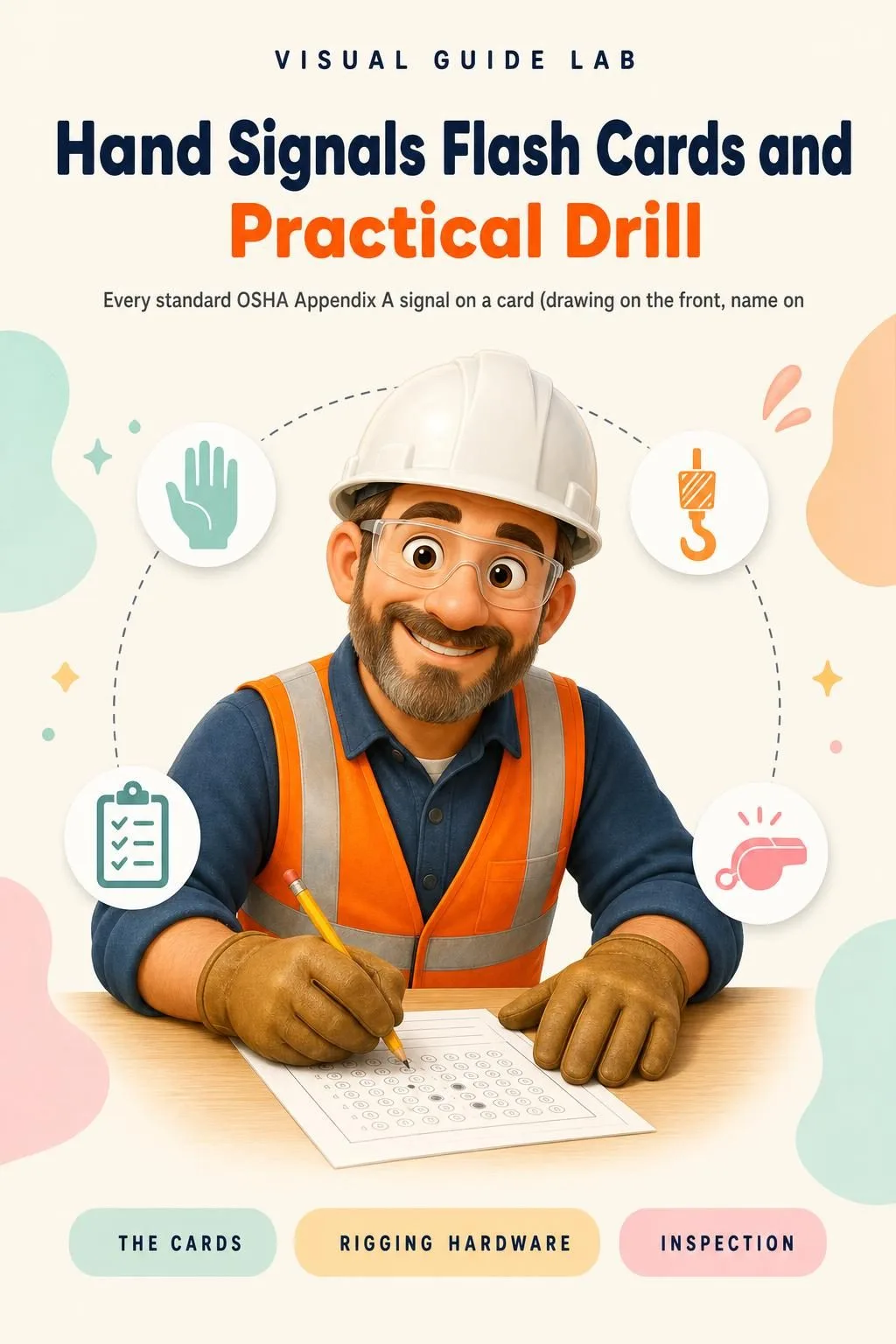
Hand Signals Flash Cards and Practical Drill

BONUS 1: «Hand Signals Flash Cards and Practical Drill»

Value on its own: US$ 17.90

Every standard OSHA Appendix A signal on a card (drawing on the front, name on the back), plus a 30-scenario drill in the style of the on-screen Signalperson practical: see the situation, give the signal.

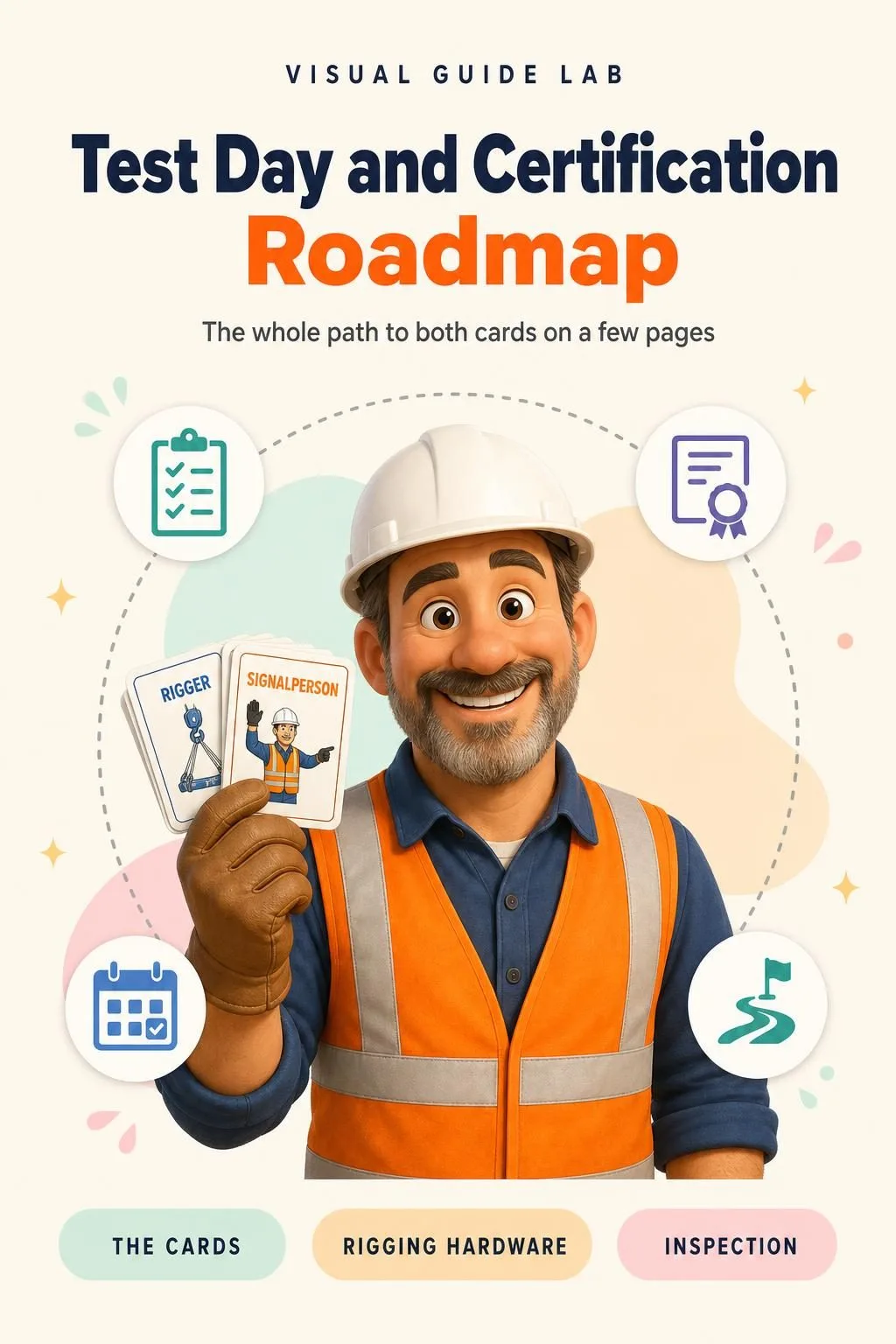
Test Day and Certification Roadmap

BONUS 2: «Test Day and Certification Roadmap»

Value on its own: US$ 14.90

The path to both cards: registering for the written exams, scheduling the practicals, what to bring, the 12-month window, and recertification every 5 years (Rigger by written exam, Signalperson by practical exam).

Rigger & Signalperson Made Visual + 2 Free Books

  • Rigger & Signalperson Made Visual: 75 illustrated pagesUS$ 63
  • BONUS 1: Hand Signals Flash Cards and Practical DrillUS$ 17.90
  • BONUS 2: Test Day and Certification RoadmapUS$ 14.90
  • High-resolution PDF to printIncluded
Total value US$ 95.80
YOUR PRICE:
US$ 27
You save US$ 68.80
YES, I WANT RIGGER & SIGNALPERSON MADE VISUAL FOR US$ 27

📄 This is a digital PDF book sent to your email: nothing is printed or shipped.

Secure purchaseEncrypted payment30-day guarantee

PDF by email: Rigger & Signalperson Made Visual reaches your inbox as a PDF, and the two free books come by email too. One-time payment, no installments or hidden costs.

Is This Book for You?

You're working toward your rigger card

You're working toward your rigger card

Hardware, inspection, hitches and sling angles, one topic per page, to review at night after your shift.

Your exams are coming up

Your exams are coming up

The final review puts the look-alike numbers and the signals that get mixed up side by side, plus a test day checklist.

You already rig or signal on site

You already rig or signal on site

A quick review of the everyday rules: the tag, removal criteria, angle factor, fall zone and every hand signal, printed and on hand.

To Sum Up: Here Is What You Get

US$ 95.80US$ 27
YES, I WANT RIGGER & SIGNALPERSON MADE VISUAL FOR US$ 27

📄 This is a digital PDF book sent to your email: nothing is printed or shipped.

30DAYS
GUARANTEE

30-Day Guarantee

30-day guarantee: tell us what didn't work and we'll refund 100%.

You have 30 days to try Rigger & Signalperson Made Visual and the two bonus books. If it doesn't work for you, tell us what didn't work and we'll refund 100% of what you paid. One email is enough. One-time payment, no subscription.

Frequently Asked Questions

How do I get the material?

You get Rigger & Signalperson Made Visual as a high-resolution PDF by email, at the address you enter at checkout, to read on your phone or print. The two bonus books, "Hand Signals Flash Cards and Practical Drill" and "Test Day and Certification Roadmap," also come by email.

Is it a monthly or one-time payment?

One-time payment of $27. No installments, no subscription.

Who is it for?

For riggers and signal persons in the US who already work on site and are preparing for the Rigger Level I and Signalperson written and practical exams. It's not a beginner's book: it doesn't explain what a sling is. It follows the published exam outlines and the OSHA and ASME rules, and puts each rule on its own page with a drawing. What the candidate handbook and YouTube don't give you: the look-alike numbers side by side, every hand signal drawn from the operator's view, the five knots step by step, all in one PDF you can print and take to the site. Check the table of contents above to see every topic.

What sources is it based on?

OSHA 29 CFR 1926 Subpart CC (including 1926.1419–1926.1422, 1926.1425, 1926.1428 and Appendix A), OSHA 1910.184 and 1926.251, ASME B30.9, B30.10, B30.26 and B30.5, the published candidate handbook outlines and manufacturers' published sling and hardware data.

Is this official material?

No. It's an independent study guide. It is not affiliated with or endorsed by NCCCO/CCO, OSHA or ASME; those names are used only to say which exams and standards the book covers. It doesn't give you a certification or a card: those come only from passing the written and practical exams with an accredited certifier.

Does it replace training on site?

No. It explains the rules, but it doesn't replace hands-on training, a qualified rigger or signal person, or your employer's lift plan. For capacities, the sling tag and the manufacturer's tables and load charts always rule.

Are the practice scenarios the real exam questions?

No. The 30 scenarios in Hand Signals Flash Cards and Practical Drill are written for this book, in the style of the practical. They're not official exam questions: they're there to train you.

Can I print it?

Yes. It's a high-resolution PDF: print the whole book or just the pages you want to take to the site.

What if I don't like it?

30-day guarantee: tell us what didn't work and we'll refund 100%. One email is enough.

One Last Thing Before You Decide...

You don't have to reread the same page hoping this time it sticks.

You don't have to memorize removal criteria and hand signals you can't picture.

And you definitely don't have to walk into the exam not knowing where to start.

One last thing before you decide: you already know the work. This book just puts the rules in order, one drawing per page, so you can review them after your shift and print the ones you need on site.

One-time payment: US$ 27 · Guarantee: 30 days · PDF by email

YES, I WANT RIGGER & SIGNALPERSON MADE VISUAL FOR US$ 27

📄 This is a digital PDF book sent to your email: nothing is printed or shipped.